Not necessarily.
In some recent “Data for AI” projects, the business scenario is missing. Standardization and data warehousing matter. But treating them as sufficient preparation for AI is a mistake.
AI needs to understand what the data means and how it relates to the decision at hand. An initial data model provides a starting point. Business scenario analysis reveals what needs to be refined.
Take a simple question: “Can we accept this order?”
Answering it requires more than inventory balances. We need existing commitments, planned production and available capacity before the requested delivery date, substitution rules, and the risk of excess inventory from additional production.
As we define the key questions, connect the relevant data, and test the agent’s analysis and simulations, gaps emerge:
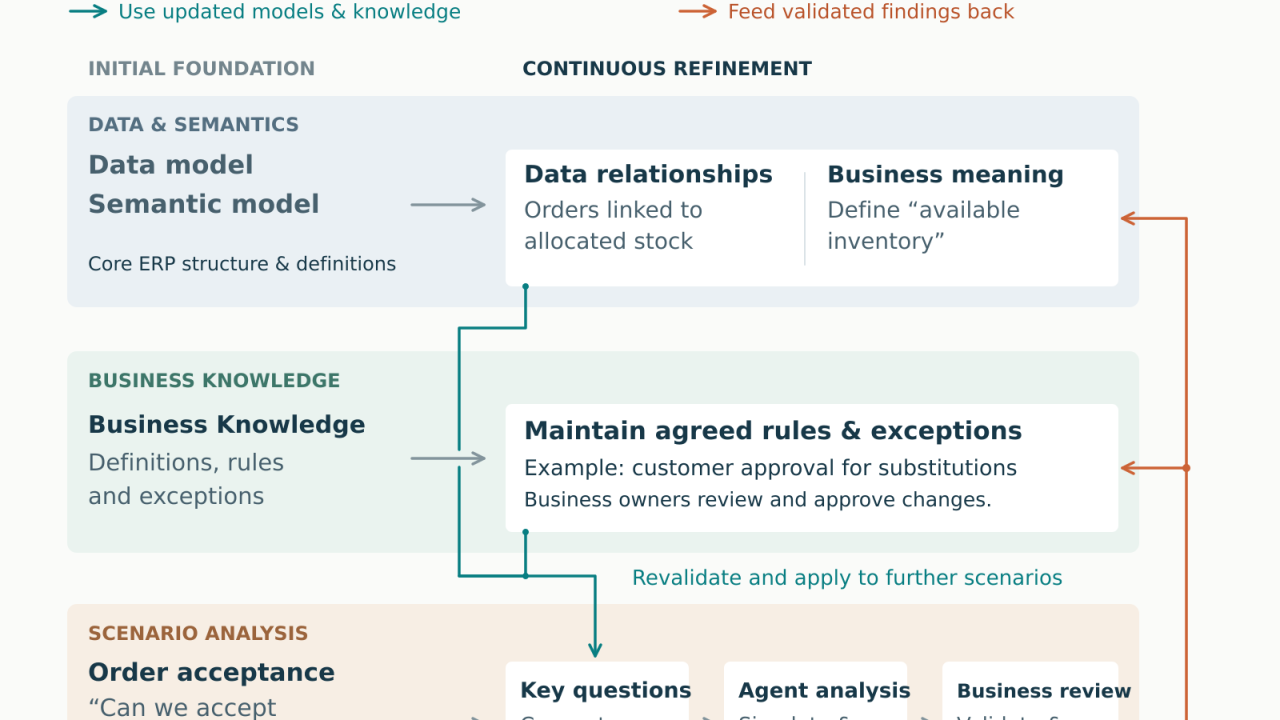
• The data model may lack the relationship between open orders and allocated stock.
• The semantic model may have no agreed definition of “available inventory.”
• The business knowledge base may be missing a customer-specific approval requirement for substitutions.
Sometimes, the analysis reveals that the business rule itself has never been clearly agreed. Resolving that gap requires the business to clarify its definitions and operating rules.
These findings should become maintained business knowledge. Once validated with the relevant business owners, they should inform updates to the data and semantic models wherever needed.
The updated models and knowledge should then support both revalidation of the original scenario and analysis of further scenarios. Otherwise, people end up explaining the same things again and again.
This is what makes the process continuous: using the foundation exposes gaps, and resolving those gaps improves the foundation for the next analysis.
AI readiness develops as real business questions continually refine the data, its meaning, and the knowledge behind decisions.